This profile originally appeared on .
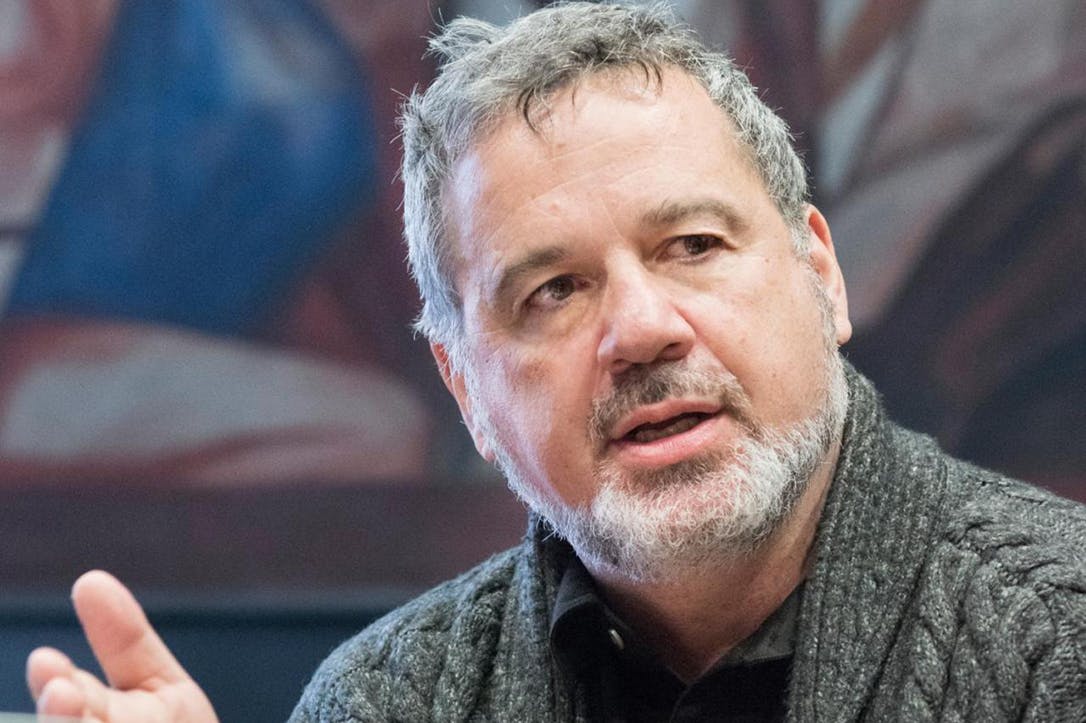
In the months leading up to the 2016 U.S. presidential election, New School for Social Research professor of history Oz Frankel proposed a new course named simply Trump as History. It has quickly become one of the department鈥檚 most popular courses among undergraduates at Eugene Lang College of Liberal Arts. Research Matters spoke with Professor Frankel about how he developed the class amid one of the most shocking electoral upsets in history.
鈥淚 was convinced it would never happen,鈥� said Frankel, reflecting on the unexpected victory, 鈥渁nd [Donald] Trump would be consigned to history.鈥� Hence the history course. Needless to say, things turned out differently. But while its initial framework had to change, the course took on a new purpose and significance.
The contemporaneous nature of the subject presents interesting challenges for a historian. 鈥淭he problem is that Trump is a current event; he is a work-in-progress,鈥� explained Frankel. This gives rise to a crucial methodological question: Perhaps it鈥檚 too early to historicize him? Instead, Frankel harnesses that very lack of historical perspective to demonstrate to students the value of thinking historically.
鈥淚 actually make the argument that the media is already thinking of Trump historically, but perhaps in the wrong ways,鈥� Frankel said. The most popular of those ways is drawing historical analogies. 鈥淭rump is like 鈥� insert your preferred historical figure here. There are continual attempts to find some historical precedent, from Richard Nixon to Pat Buchanan to PT Barnum,鈥� he explained. 鈥淭here was also a drive to dig up 鈥� especially before the election 鈥� prophecies from the past that somehow predicted the rise of Trump, like Philip Roth鈥檚 2004 novel , Richard Rorty鈥檚 1998 book , or that .鈥�
Frankel sees these approaches as symptoms of a state of crisis and public bewilderment that pushes society to look to the past in order to grapple with the present. However, these efforts rely on a narrow conception of history and miss the important structural and historical roots of Trumpism. 鈥淎nalogies are accessible, but they often reduce history to a succession of personalities. I address these popular comparisons with my students, and we discuss why they constitute problematic ways to engage the past.鈥�
In other words, bigger questions of how we think about history today, and what kind of historical consciousness is cultivated among the public, guide the course. These questions concern popular perceptions of history as well as 鈥渢he kind of historical imagination propelling people like [Steve] Bannon or Stephen Miller鈥� and 鈥渢he influence in these two cases of [early-20th-century German philosopher Oswald] Spengler, with his organic and cyclical conception of history. It鈥檚 a very pessimistic, reactionary view.鈥�
Frankel encourages his students to move past Trump as an individual and to think of Trumpism as a historical and political phenomenon. 鈥淭rump is a tool for thinking about patterns of American history we didn鈥檛 pay much attention to in the early part of the 21st century.鈥� Specifically, Frankel guides students to narrow in on 鈥渢he history of American populism; of racism, anti-immigrant sentiment, and its historicity; issues of masculinity, politics, and spectacle; as well as the subject position of the businessman as a cultural hero. We also have the history of 鈥榝ake news.鈥欌�� Weaving these historical threads together allows the students to map 鈥渨hat was in the DNA of American democracy that was conducive to something like Trumpism.鈥�
Drawing on a variety of sources, including journalistic articles, academic publications, films, and blogs, Frankel leads students through an exploration of each of the key themes that contribute to Trumpism, such as populism. 鈥淒uring the election, Bernie [Sanders] and Trump were both being labeled as populists,鈥� Frankel recalled. 鈥淚n class, we explore the long historical arch of populism in U.S. history, which brings us to late 20th century, the Tea Party, current reflections on the idea of the white working class, and the question of why people are ostensibly voting against their material interests.鈥� Another theme is racial dynamics, especially the often ever-defensive identities congealing around whiteness. Frankel commented, 鈥淲hy do whites feel threatened? Whiteness is usually 鈥榯ransparent,鈥� but when whites feel threatened, then they become white. There is a long thread of paranoia and fear in American history.鈥�
Related concerns about social and cultural decline cross political divisions. Frankel assigns his students George Packer鈥檚 (2013), which weaves together short biographies that document familiar themes of de-industrialization, the demise of institutions, the unraveling of the American social fabric, and the ascendance of 鈥渙rganized money.鈥� While the book鈥檚 thesis comes from the political Left, it also overlaps with Bannon鈥檚 bleak view of the trajectory of American history, encouraging students to think beyond entrenched political distinctions.
In addition to considering historical continuities, Frankel encourages his student to think about what is new and unprecedented about the Trump moment in American political life. While Trump鈥檚 seemingly improbable political victories throughout 2016 could be cast as a series of flukes that might have ended very differently, they also show us the importance of accidents and of individual agency in history. 鈥淭rump certainly has the capacity of creating a new political reality; he already took over the Republican Party and introduced new dynamics into the American public sphere.鈥�
Trump is titillating, and students 鈥� many of whom were not necessarily interested in history before 鈥� are eager to grapple with these issues, including their own role in the current political moment. Frankel insists upon it, remarking, 鈥淚 ask students to reflect on our complicity in the Trump phenomenon, the near-addiction that we have all developed to Trump, something that鈥檚 become so ingrained in our daily existence鈥� 鈥� and, for many, the very reason they signed up for the class.